
If we only treat the burnout, we will be back here again
No time to read? Click play to listen

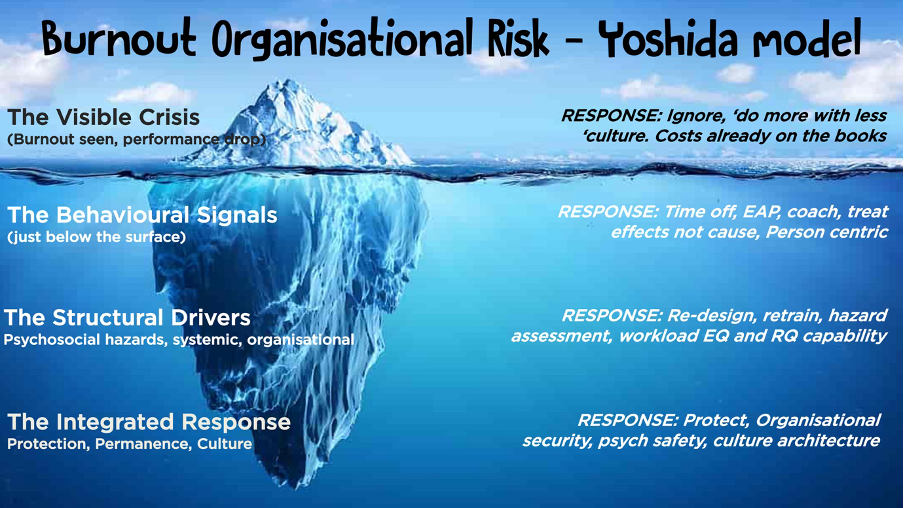
There is a moment in every burnout conversation where the organisation has to decide how deep it is willing to go.
The first layer is usually immediate care.
Someone is exhausted. They need support. They may need time away, a workload adjustment, a manager who listens properly, access to professional help, and a plan that helps them return safely and sustainably.
That layer matters.
Stopping the haemorrhaging is urgent because retaining our best people matters. Helping them recover their energy, confidence and contribution is good for the person, good for their family, and good for the business.
But if that is all we do, we are often only pausing the problem, papering over the cracks. Clearing the smoke without finding the fire.
The deeper question is this: what are we sending people back into?
If the same job demands remain, if control is still low, if support is still inconsistent, if change continues to land without proper communication, if recognition is still missing, and if managers are still expected to absorb everything without the right skills or capacity, then recovery becomes fragile.
People come back into the same architecture of pressure. And six months later, the business is having the same conversation again.
That is why the structural work matters.
It is less visible than crisis response, which makes it easier to delay. It can also feel harder because it asks bigger questions about workload, expectations, accountability, leadership capability, job design and culture.
But this is where the permanence sits.
Successful organisations are moving beyond individual recovery plans and asking what needs to change in the work itself.
They are reviewing workload properly, not just asking people to prioritise impossible lists. They are building manager capability, because many managers are sitting at the pressure point between strategy and strain. They are improving role clarity, decision rights and escalation routes.
They are treating psychosocial risk with the same seriousness they would apply to any other organisational risk.
This is the shift. Burnout support gives people a chance to recover. Structural redesign gives recovery somewhere to live.
That is where the business case becomes powerful.
Because the cost of burnout is rarely limited to one absence claim or one resignation. It shows up in lost knowledge, reduced performance, slower execution, damaged relationships, poor decisions, recruitment costs and the quiet loss of discretionary effort.
Businesses often pay for burnout long before they name it.
The organisations that act now will retain more is clearer than it has been.
• Protect people first.
• Stabilise the immediate risk.
• Then go deeper into the structure.
That is how we stop returning to the same crisis. Download the white paper for the evidence base to confirm this is the best approach. Then let’s set a strategy together.
