
No time to read? Click play to listen

Arguably, the worst accident in aviation history turned on a single question that no one acted on.
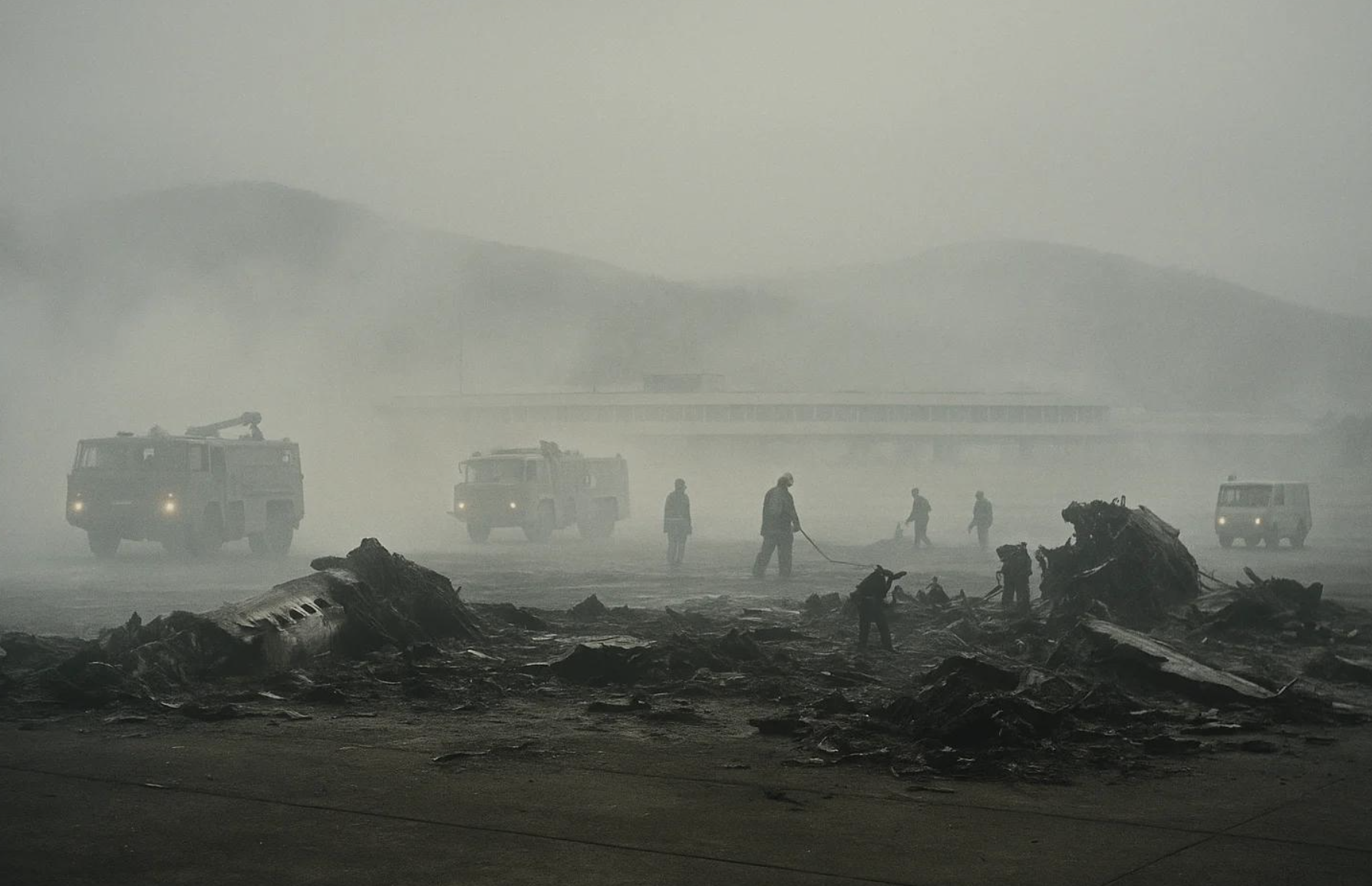
This was in March 1977. It was in thick fog at Tenerife, when a KLM jet began its takeoff roll while a Pan Am jet was still on the runway.
This was a tragic error that cost 583 people their lives. But beyond the almost incomprehensible tragedy, what stays with us is one moment in the cockpit, on the black box recording.
The flight engineer asked whether the Pan Am plane was clear of the runway, and the captain, one of the most senior and respected pilots in that airline, answered emphatically that it was clear, and then the moment passed.
But one person had noticed, and the relationship in that cockpit was not strong enough to let what he noticed change what inevitably happened next.
Aviation industry experts responded by rebuilding the way crews relate to one another through what became crew resource management, so that the most junior voice on the flight deck could stop the most senior one.
It's one of the clearest examples in the world of an industry deciding that relationships are a safety system.
This was groundbreaking stuff. Challenging the captain is, is not an easy thing to do.
So psychological safety then is just one element of this, and it's one element of relational intelligence, which is a vital skill in that capability in a leader. It's the skill of managing what happens between people. As I say, look at the dance, not the dancers.
It's about building enough trust that a team holds together under pressure, and it makes it easy for someone to say the thing that is hard to say. Amy Edmondson's research at Harvard on psychological safety has shown for more than twenty-five years that teams learn and perform better when people feel safe to speak up, which isn't always about kindness and niceness.
Relational intelligence also builds capacity in holding a team together, containing that which is overwhelming them, distressing the team, and frustrating them. Not jumping in to rescue and save them, which actually reduces their capacity to learn and grow.
So it takes patience and skill to hold back and allow a team to solve the problem themselves.
In our Level Up program, leaders practice with their peers in a cohort that becomes a network of people looking out for one another, because what someone notices is only as useful as the relationship that lets them speak up and say it.
I’d love to share more about this in preparing your chosen people to lead your business through rupture, risk and rapid change. Being ready for whatever is coming at them, which isn’t always predictable.
