
How far can we drive on a flat tyre?

No time to read? Click play to listen

Burnout inevitably comes up in conversations about capacity. And I understand why.
When one of our best leaders is struggling, there is a genuine commercial dilemma.
The business and the leader may have co-contributed to the problem through workload, ambiguity, pressure, poor boundaries, emotional overwhelm and/or relentless change.
At the same time, the organisation still needs the person. So we keep driving.
I have started thinking about this like driving on a flat tyre, because we can’t take our foot off the pedal and slow down...
And modern run-flat tyres are clever. They allow us to keep moving after pressure has been lost (for a while), and at a reduced speed (for a shorter time). Their purpose is to give us enough time to get the problem fixed. Nobody drives around indefinitely congratulating themselves that the tyre has not completely failed, and somehow expecting it to reinflate itself!
Yet we can do something remarkably similar with people. They are still attending meetings, still making decisions, and still carrying their team. So we assume they are functioning.
This is where Burnout Intelligence, the second Level Up edge, becomes important.
Our recent literature review produced some fascinating findings.
A 2023 meta-analysis found that the wellbeing lift from taking time off is gone within about a week of walking back in the door. Put another way, a waste of downtime, unless we do something differently.
Another study found that when burnout-compromised leaders and their supervisors collaboratively redesigned their role to identify the triggers (and it isn’t always the workload), and develop a self-care strategy, the return efficacy is double the usual practice, and can save up to 200 days
That changes the conversation.
For a great many people, we can begin restoring capacity while they remain working, provided we follow a defined process.
Not to brag, but the last two leaders who completed this innovative approach to burnout volunteered for promotion and more responsibility within three months of completing my program.
(I will say, for severe presentations, medical assessment and reduced demands may be required. The literature is very clear about that boundary too).
One model we use to understand recovery looks at three things burnout progressively strips away
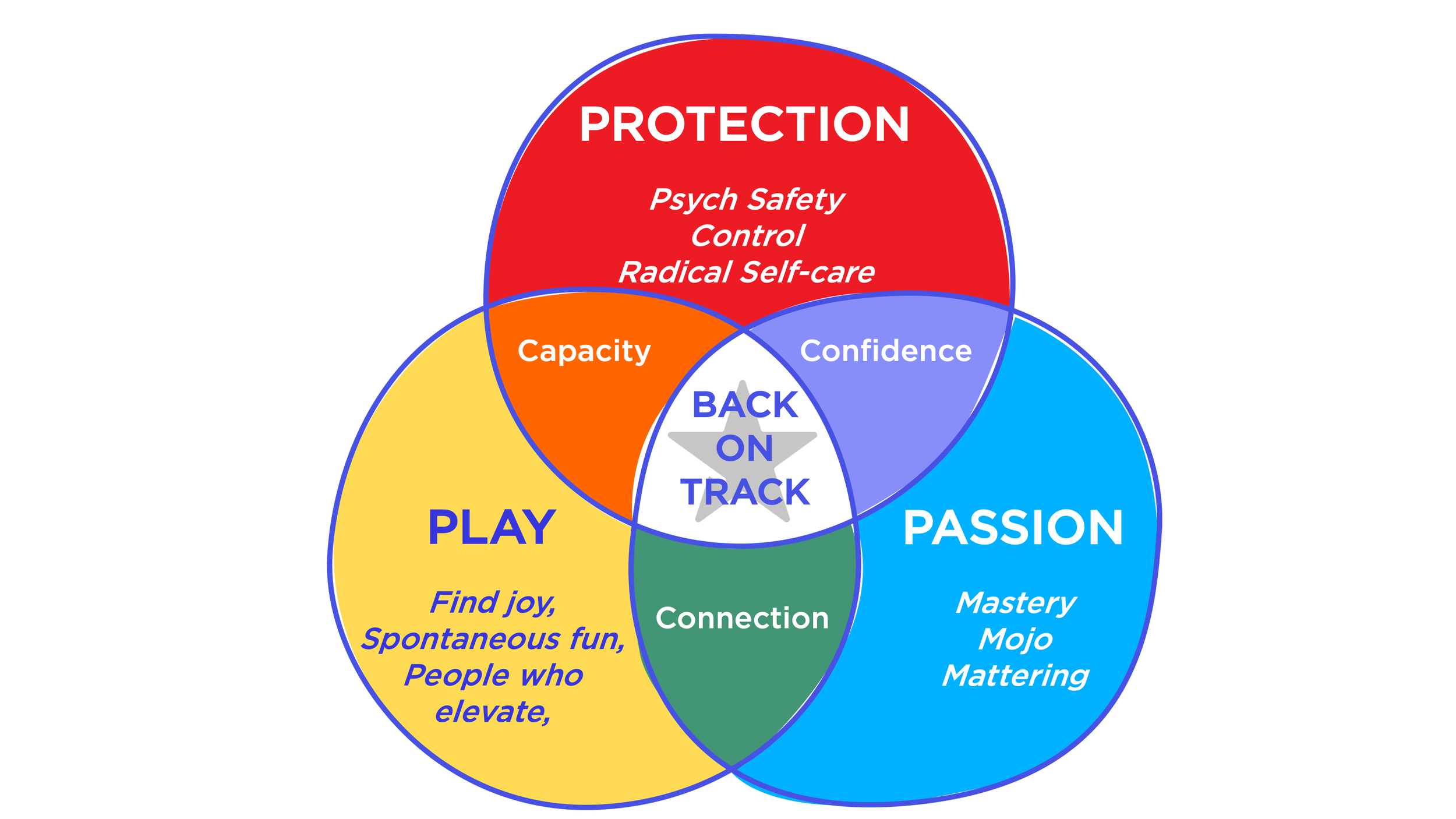
Burnout Intelligence means recognising the leak early enough to do something useful about it.
Because our critical leaders are far too valuable to keep driving until the wheel needs replacing.
This is one of the five edges we develop through Level Up.
If you have someone who is still performing and you suspect it is costing them considerably more than it used to, let's have a conversation.
